
A saltwater chlorinator is a pool sanitising system that uses electricity to convert dissolved salt into chlorine. Also called a salt chlorine generator or saltwater pool chlorinator, it produces chlorine as pool water passes through an electrolytic cell.
This reduces the need for regular manual chlorine dosing in both residential and commercial swimming pool systems. However, a saltwater pool still requires water testing, balanced chemistry and equipment maintenance.
Understanding how the system works helps you choose the right chlorinator, manage its output and keep your pool ready for swimming.
Key Takeaways:
- Saltwater chlorinators use electricity to convert dissolved salt into chlorine.
- Automatic chlorine production reduces manual dosing but does not eliminate water testing or other pool chemicals.
- Choose a chlorinator suited to your pool’s size, bather load and pump runtime. Higher swimmer numbers increase chlorine demand.
- Regular water testing, salt cell inspections and proper circulation support reliable performance.
- Total ownership costs include installation, electricity, replacement cells and ongoing water-balancing products.
How Does a Saltwater Chlorinator Work?
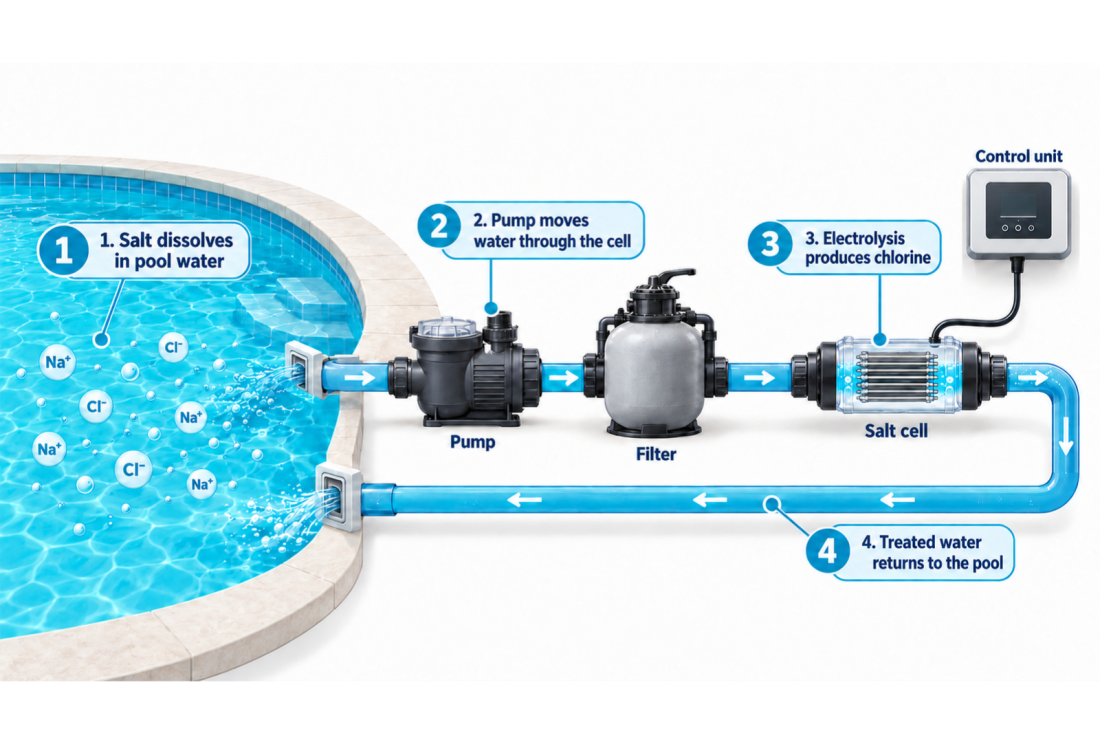
Most salt chlorination systems have two main components: a salt cell installed in the pool plumbing and a control unit that supplies power and regulates chlorine production.
The process follows four steps:
- Pool salt dissolves in the water. The amount required depends on your pool’s volume and the equipment’s specified salt concentration.
- The pump moves water through the cell. Dissolved salt passes between electrically charged plates.
- Electrolysis generates chlorine. The chlorine forms sanitising substances that help control bacteria and algae.
- Treated water returns to the pool. Much of the chlorine eventually returns to chloride, allowing the process to repeat.
The chlorinator works alongside the pump and filter. Chlorine sanitises the water, while the filter captures particles and debris.
A saltwater pool is still a chlorine pool. The main difference is that the equipment produces chlorine on site.
How Much Salt Does a Saltwater Pool Need?
Many conventional salt chlorinators operate at around 3,000–5,000 parts per million (ppm). However, requirements vary, and some low-salt systems operate at substantially lower concentrations.
Always use the target specified in your chlorinator’s manual. Adding extra salt does not automatically improve sanitation.
Test the existing concentration before adding salt. To calculate a top-up:
Salt required (kg) = pool volume (litres) × required increase (ppm) ÷ 1,000,000
For example, raising a 40,000-litre pool from 3,000 to 4,000 ppm requires:
40,000 × 1,000 ÷ 1,000,000 = 40 kg of salt
This illustrates the calculation; it is not a recommended target for every system.
Use the salt grade specified by the manufacturer and follow its instructions for dissolving salt before restarting chlorine production.
Benefits of a Saltwater Chlorinator
Less manual chlorine handling
Generating chlorine automatically reduces the routine need to buy, transport, store and pour chlorine. This can make pool care easier, particularly during the swimming season.
Occasional supplemental chlorine may still be necessary when demand exceeds production or the equipment is unavailable.
Adjustable chlorine production
Chlorine demand changes with hot weather, strong sunlight and bather load. Many chlorinators let you manually adjust production, while systems such as Envirogen support automatic control to help maintain stable chlorine levels as demand changes.
For manually adjusted systems, a 50% output setting describes equipment production, not the chlorine concentration in your pool. Regular water testing confirms whether production is meeting demand.
Convenient automation
Depending on the model, pool systems may offer timers, alerts and integration with other equipment. Waterlink’s Envirogen, for example, has four programmable GPOs and four relays for functions such as CO₂ dosing and heating control. It can be configured for chlorine-only control, pH control, or both, with sensor-based or timer-based automation.
Automatic pH control and liquid chlorine backup require dosing pump installation. Remote monitoring is available as an upgrade, and the system can diagnose and report faults and alarms when connected to the internet. Check which features are included in the selected configuration.
A more manageable maintenance routine
Once correctly sized and adjusted, a chlorinator can reduce the work involved in routine sanitiser dosing. You still need to clean the pool, maintain filtration and check water balance.
Saltwater Pool vs Manually Dosed Chlorine Pool
Both systems use chlorine to sanitise water. Their main differences involve equipment, dosing and ongoing expenses.
| Consideration | Saltwater chlorination | Manual chlorine dosing |
| Chlorine supply | Generated from dissolved salt | Added using suitable chlorine products |
| Initial setup | Chlorinator and installation | No salt generator required |
| Routine tasks | Test water, adjust output, inspect cell | Test water and add chlorine |
| Ongoing expenses | Electricity, salt top-ups, balancing chemicals and replacement cell | Chlorine and balancing chemicals |
| Equipment maintenance | Cell and controller require attention | Depends on dosing equipment |
A saltwater system does not eliminate chemical use. Your pool may still need pH adjustment, stabiliser and other treatments based on test results.
How to Choose the Right Saltwater Chlorinator
Start with your pool’s volume, then compare the manufacturer’s pool capacity rating and chlorine output in grams per hour (g/h).
Ask your installer to consider:
- Pool volume and surface exposure to sunlight.
- Local climate and seasonal conditions.
- Expected bather load, including the number of swimmers and how frequently the pool is used.
- Available pump operating time.
- Compatibility with existing equipment.
- Replacement cell cost and availability.
A maximum pool-size rating alone does not explain how a unit will perform under every condition. Ask whether the proposed model can meet peak demand within your planned operating schedule.
For a simplified example, a 25 g/h cell running for eight hours at 50% output would theoretically generate:
25 × 8 × 0.5 = 100 grams of chlorine
Actual production depends on operating conditions and the unit’s controls. Water tests confirm whether the system is meeting demand.
Saltwater Chlorinator Maintenance
1. Test and balance the water
Check free chlorine and pH regularly, with more frequent testing during heavy use or changing weather.
Also monitor:
- Salt concentration.
- Total alkalinity.
- Calcium hardness.
- Cyanuric acid, also called stabiliser.
Use targets appropriate to your pool surface, equipment and local pool-care guidance. Recording results helps you identify changes before they become persistent problems.
2. Inspect the salt cell
Check the cell for white calcium deposits and debris at the intervals specified in the manual.
Self-cleaning salt chlorinators commonly reverse electrical polarity to help reduce scale. They still need inspection and may require occasional cleaning.
When cleaning is necessary:
- Switch off and isolate equipment as instructed.
- Use the recommended rinsing method first.
- Apply chemical cleaners only when needed.
- Follow the specified concentration and contact time.
- Avoid scraping or damaging the coated plates.
Unnecessary or aggressive cleaning can shorten cell life.
3. Keep water flowing properly
Empty skimmer and pump baskets, maintain the filter and check the pool water level.
Restricted circulation can prevent chlorine production. If a flow warning appears, investigate the cause rather than bypassing the safety device.
4. Review operating settings
Check the timer and output after power interruptions, seasonal changes or periods of heavy swimming.
Adjust settings using water test results. A schedule that works during cooler months may provide insufficient chlorine during busy summer conditions.
Why Is My Salt Chlorinator Not Producing Enough Chlorine?
Low chlorine does not automatically mean the cell needs replacing. Start with these checks:
| Possible cause | What to check |
| Low output setting | Confirm the selected production percentage |
| Insufficient runtime | Review pump and chlorinator schedules |
| Increased chlorine demand | Consider recent heavy swimming or contamination |
| Calcium deposits | Inspect the cell and clean if necessary |
| Incorrect salt concentration | Confirm the reading with a separate salt test |
| Restricted water flow | Check baskets, filter and water level |
| Unsuitable stabiliser level | Test cyanuric acid |
| Low water temperature | Check the model’s operating limits |
If water balance, flow and settings are correct but production remains low, arrange an equipment assessment.
Saltwater Chlorinator Costs: What Should You Compare?
The purchase price is only part of the ownership cost. When comparing systems, request details for:
- Equipment and installation.
- Initial salt requirements.
- Electricity consumption.
- Replacement cells.
- Warranty coverage and servicing.
- Ongoing water-balancing products.
Reduced chlorine purchases may offset some expenses, but savings vary with electricity prices, pool use and cell lifespan.
A useful quote should explain both the installation cost and likely replacement expenses.
Commercial Saltwater Chlorination with Envirogen
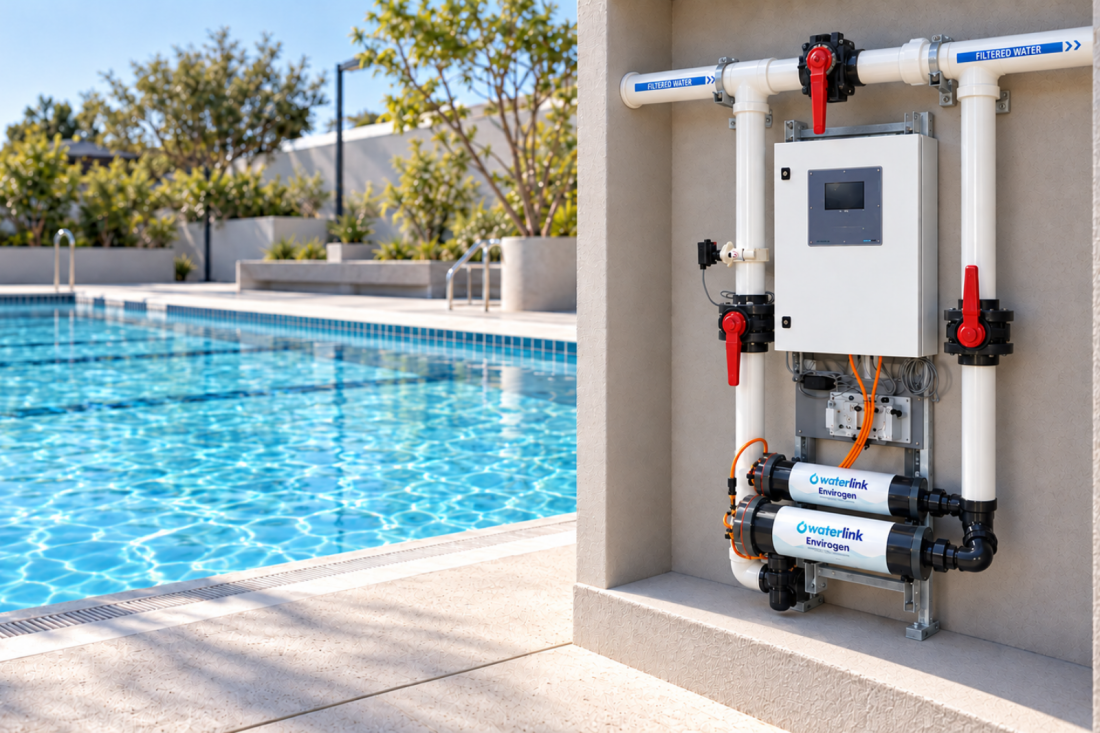
Commercial pools need chlorination equipment suited to their operating hours and swimmer demand. Envirogen combines a commercial chlorine generator and chemical dosing system in one compact unit, bringing chlorine production and dosing together to simplify installation and ongoing maintenance.
Compatible with salt or suitable magnesium-based pool systems, Envirogen produces sodium hypochlorite on site. Mechanical and electronic safety features support operation, while optional modules provide backup capacity and scope for future upgrades.
With a compatible remote monitoring connection, Envirogen Pro can report faults and alarms in real time, helping operators identify problems and respond sooner.
For facilities considering a commercial saltwater chlorinator, system selection should account for peak chlorine demand, water chemistry, monitoring requirements and servicing access.
Choosing a Saltwater Chlorinator for Your Pool
A saltwater chlorinator simplifies pool care by producing chlorine on site and reducing manual dosing. Choosing the right equipment, testing the water regularly and maintaining the salt cell help keep your system performing reliably.
At Waterlink, we can help you choose pool automation systems and water treatment equipment suited to your pool’s size, chlorine demand and operating needs. Request a quote or call us to discuss the right solution for your pool.
Frequently Asked Questions
How many hours should a saltwater chlorinator run?
There is no universal runtime. It depends on pool volume, bather load, chlorine demand and cell capacity. For manually controlled chlorinators, adjust runtime and output using measured chlorine levels. Automatic systems like Envirogen regulate chlorine production in response to demand rather than relying on a fixed production schedule.
How long does a salt chlorinator cell last?
Salt cells generally last several years, but lifespan varies by model, operating hours, water chemistry and maintenance. Check the manufacturer’s rated service life and warranty, and include eventual replacement in your budget.
Does a saltwater pool ever need extra chlorine?
Yes. Additional chlorine may be necessary when demand exceeds production, during certain corrective treatments or while equipment is being repaired. Test the water first and follow an appropriate treatment plan.
Is a saltwater chlorinator worth it?
A saltwater chlorinator can be worthwhile if you want less manual chlorine dosing and convenient control over sanitiser production.
Choose a system matched to your pool’s size and peak demand, then maintain water balance and inspect the cell regularly. Correct sizing and consistent care are essential to reliable performance.