General

Indoor commercial swimming pool with greenish water, swimming lanes and blue spectator seating

Why Is My Pool Green? Causes, Solutions & How to Clear It Fast

A pool usually turns green because insufficient free chlorine allows algae to grow, although faulty circulation, unbalanced water chemistry or dissolved metals can produce a similar colour change. The tempting response is to add more chlorine immediately. That may work for algae, but it will not solve every green-water problem. In larger facilities, dependable commercial…

Continue Reading »

Sunlit magnesium pool with clear blue water, lush garden plants and scenic waterfront view

Magnesium Pools: How They Work, Benefits and Maintenance

A magnesium pool is a swimming pool sanitised with a blend of magnesium chloride and potassium chloride instead of ordinary pool salt. A chlorinator turns those minerals into a small, steady supply of chlorine, so the pool needs roughly half the chlorine of a traditional pool. The result is soft, silky water with little chlorine…

Continue Reading »

Synergy Econ: Low-Pressure AOP for Enhanced Water Treatment

Secondary disinfection is becoming an increasingly common consideration for aquatic facilities looking to improve water quality, reduce chloramines and enhance the swimmer experience. For facilities seeking a practical Advanced Oxidation Process (AOP) solution, Synergy Econ combines low-pressure UV and ozone in one integrated system. What Is Low-Pressure AOP? Advanced Oxidation Process (AOP) combines ultraviolet light…

Continue Reading »

Why More Aquatic Facilities Are Choosing On-Site Chlorine Generation

Growing emphasis on operator safety, chemical handling and long-term operating costs has led many aquatic facilities to reconsider how chlorine is supplied and managed.Rather than relying on bulk chemical deliveries, on-site chlorine generation enables facilities to produce sodium hypochlorite as required, reducing the need for transporting and storing hazardous chemicals. How Does On-Site Chlorine Generation…

Continue Reading »

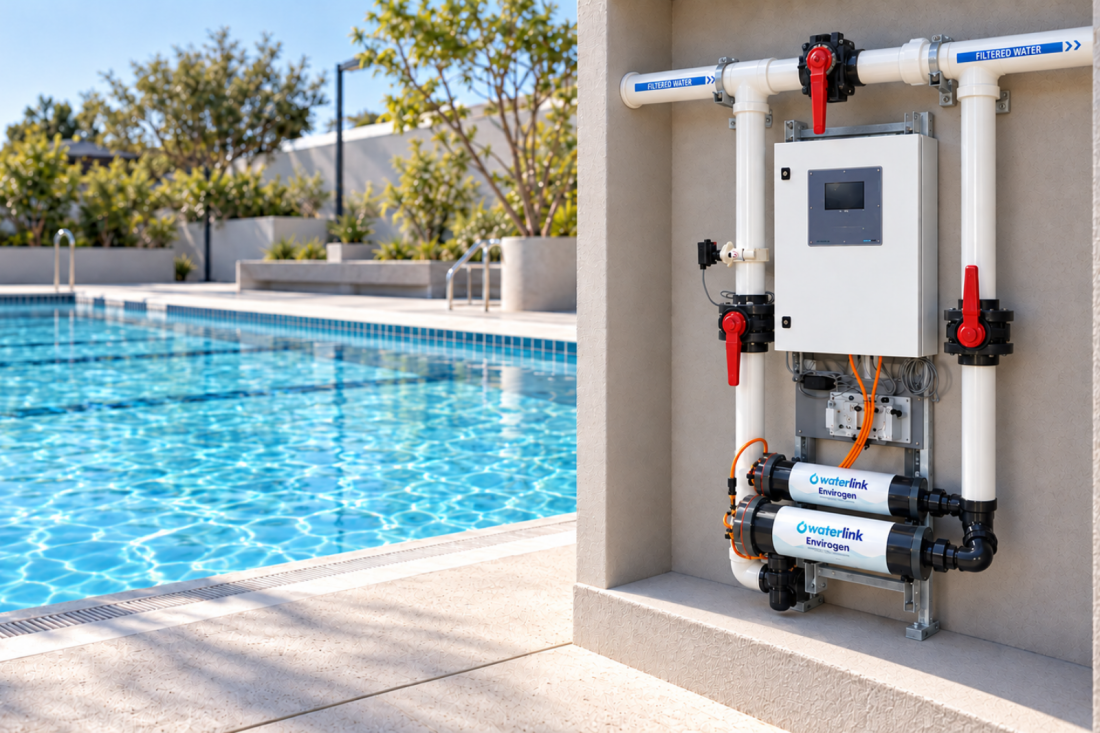
What Are Chemical Dosing Systems and Why Are They Important?

Maintaining stable water chemistry is fundamental to efficient pool operation. While manual testing remains suitable for some facilities, increasing compliance expectations and the demand for greater operational efficiency have made automated chemical dosing systems the preferred solution for many commercial aquatic environments. How Does a Chemical Dosing System Work? Chemical dosing systems continuously monitor key…

Continue Reading »

swim4life-pool

How To Lower Swim School Setup Costs

As construction and energy costs continue to rise, building a cost effective, future ready aquatic facility has become a growing challenge for swim schools and sports centres. But one Melbourne based facility has demonstrated how smart planning and scalable technology can streamline setup and operations without compromising on quality. Swim4Life’s new swim school in Tarneit…

Continue Reading »

woman,standing-on-diving-board

Smarter Pool Design: Reducing Energy Costs in Aquatic Centres

Energy efficiency is no longer optional for aquatic centres, it’s a core operational requirement. Rising energy prices, increasing compliance obligations, and stronger sustainability expectations are driving operators to find practical ways to reduce costs without compromising water quality, safety, or user experience. With the right system design and targeted upgrades, both new and existing facilities…

Continue Reading »